
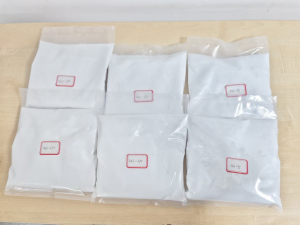
As a flame retardant, it can be widely used in materials such as polyethylene, polypropylene, polystyrene, polyvinyl chloride, nylon, engineering plastics (ABS), rubber, paints, coatings, synthetic resins, paper, etc.
As a de-foamer, it is used to melt glass to remove air bubbles in polylipid fibres.
Dust-free antimony oxide uses high-quality antimony trioxide to treat its powder through a special process to make it into a slightly wet state, thereby effectively eliminating the harm caused to the human body by dust during use, while achieving the goals of high efficiency, flame retardancy and plasticisation.
It binds to substrates more easily than antimony trioxide...
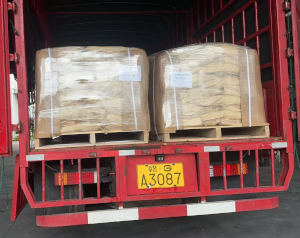
Catalytic antimony oxide is made by processing high-quality special-grade refined antimony through a unique plasma smelting method. It is characterised by small particle size, few impurities, pure crystal form, good activity and easy dispersion.
It is mainly used in the synthetic fibre industry as a polyester polycondensation catalyst.
This product is produced at low temperature using an internationally advanced process. Compared with ordinary antimony trioxide, it has the characteristics of fine particle size, high cubic crystal ratio, low insoluble matter and good dispersion.
Under the same conditions, it is easier to react or dissolve with substances such as hydrochloric acid and ethylene glycol.
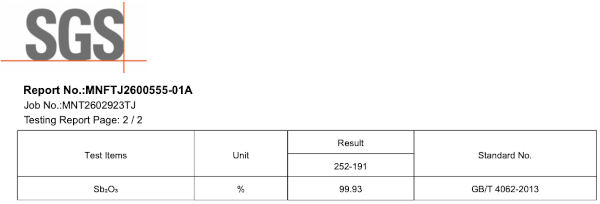
Download : SGS_Report.pdf
Contact Sylvia Kim for more information.
30 years of on-site experience in China—a reliable business partner.
Our Expertise:
If you need a reliable partner,
I’m ready to work with you.

+82-10-7905-7784 (Korea)
+86 138 2059 7784 (China)
sylvia@baroocean.com